


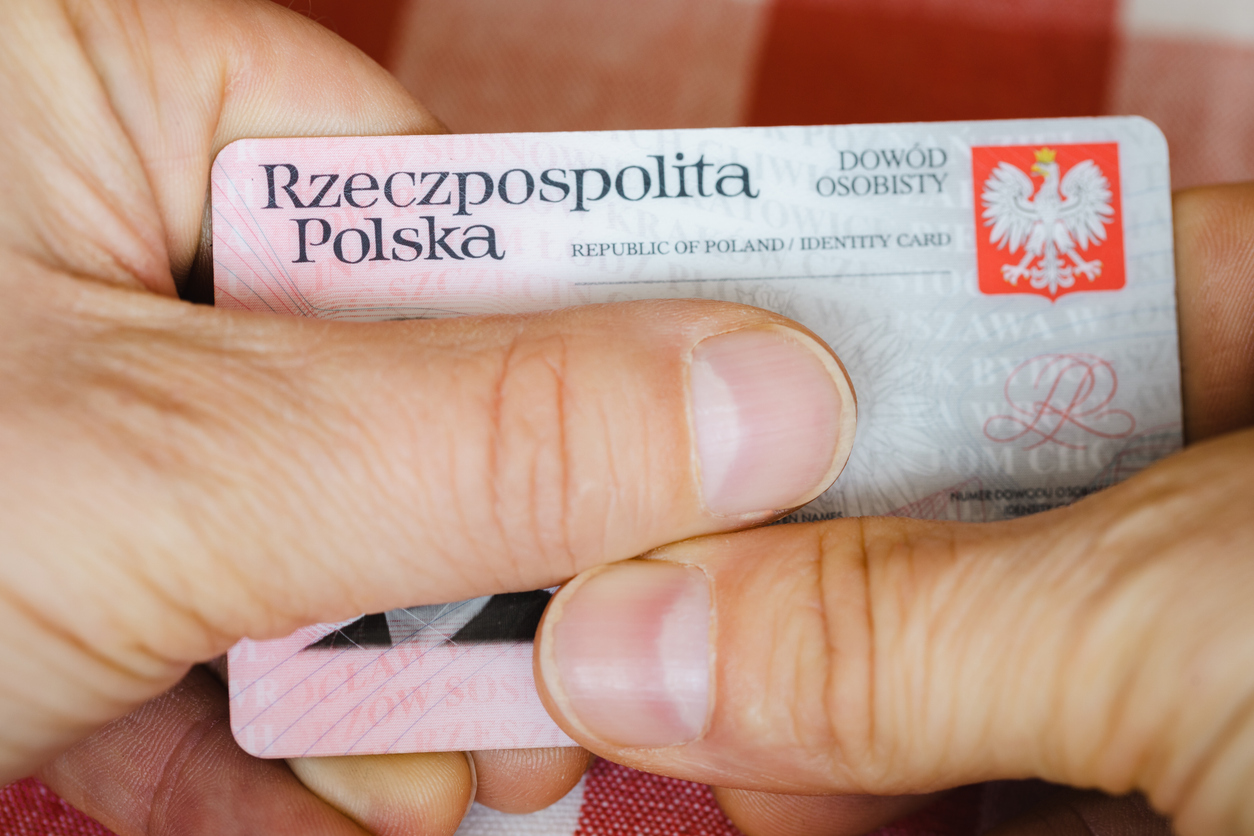
Certified ID Card Translation in Poland: National identity cards are designed for portability and often feature bilingual or multilingual fields to simplify international travel. However, when navigating official procedures in a foreign country, a multilingual layout is rarely enough.
In Poland, public administration offices, financial systems, and courts operate strictly in the state language. To formalize your status, a certified translation is frequently mandatory. Below, the MS Mostowy Translator’s Office breaks down when you need an official ID card translation, how the process works, and how to accurately calculate the costs.
Who Can Perform an Official ID Card Translation?
Table of content
A certified translation of an identity document carries legal weight, meaning it cannot be handled by a standard translation agency. It must be prepared exclusively by a licensed Sworn Translator (tłumacz przysięgły) who has passed the rigorous state examinations administered by the Polish Ministry of Justice.
By law, sworn translations must feature the translator’s official seal and a handwritten signature. Furthermore, the translator does not just translate the raw text; they must produce a meticulous typographical description of the document. This includes detailing the card’s physical format, its background patterns, the holder’s photograph, and any integrated security features (such as holograms or embossed marks).
When Do Polish Authorities Request It?
While an identity card is highly standardized, you will generally be required to submit a sworn translation alongside companion documents—like a passport translation—in several key situations:
- Permanent or Temporary Residency: When permanently moving to Poland to live, work, or open a business, immigration offices (Urząd Wojewódzki) and local registration desks require a translated ID card to officially log your identity and issue residence permits.
- Visa and Work Applications: Consulates, embassies, and labor offices require standardized identity profiles when reviewing visa requests or issuing employment authorizations.
- Court and Inheritance Proceedings: If you are a party to a divorce, child custody case, or asset distribution under a last will and testament, courts and notaries use certified translations to securely verify the identity of beneficiaries and claimants residing outside Poland.
- Civil Registry Updates: If you are updating family records at a Polish Registry Office (USC), you may need an ID translation to support your birth certificate translation or marriage certificate translation applications.
Cost and Delivery Timelines for ID Translations
National identity cards are highly repetitive and templated documents. Because the layout is predictable, the turnaround time is incredibly fast: a certified ID card translation is typically completed within 1 to 2 business days from order confirmation.
When it comes to cost, translation fees in Poland are strictly regulated based on character volume rather than the physical size of the document: 1 statutory page = 1125 characters including spaces.
- Standard ID Cards: The process requires translating personal data (names, birth dates, issuing authorities, expiration dates, and document serial numbers) combined with a structural description of the card’s security features. For almost all countries, this fits neatly into 2 standard translation pages, allowing for a predictable, flat-rate pricing model.
- With Notarial Certifications: Sometimes, institutions do not request a translation of the physical card, but rather a translation of a notarized copy of the ID card. If the copy bears foreign notarial seals, stamps, or declarations, these must also be fully translated, which usually adds 1 to 2 additional pages to the final bill.
Secure Your Translation: Our Remote Order Process
- Send a Scan: Email a clear copy of both sides of your identity card to us, or upload the files directly via the contact form on our website’s Pricelist page.
- Receive a Fast Quote: Our experts instantly evaluate the file structure and send over a clear price estimate and timeline.
- Accept and Pay: Upon your approval, we provide secure payment links. Once the down-payment is confirmed, a sworn translator immediately begins the job.
- Professional Execution: The translator meticulously transcribes the data and affixes their official seal, turning the translation into an unassailable legal document.
- Physical Inspection (If Required): If an agency demands a translation performed “from the original document,” you can safely deliver the physical card to our office or mail it via priority registered post. We will inspect it immediately and return it intact.
- Collection or Shipping: We will send you a courtesy digital scan of the finished translation, and the official, stamped physical paperwork will be shipped straight to your address or held for office pickup.
FAQ: Certified ID Card Translation in Poland
Yes. Even though modern European Union identity cards are highly standardized and include English subtitles, Polish administrative bodies are legally required to conduct business in Polish. A sworn translation is necessary to provide an official, legally recognized counterpart in the Polish language.
No. Polish banks, courts, notaries, and government offices will completely reject standard commercial translations for identity verification. Any foreign identity document being entered into official Polish files must be translated by a sworn translator registered with the Ministry of Justice.
A translation “from a scan” means the translator works from a digital image and adds a legal note stating they could not physically verify the card. A translation “from the original” requires the translator to physically handle the card to verify hidden security textures and holograms. Because certain government departments strictly demand original-based certifications, always check with your clerk beforehand.
Yes. A sworn translator is legally obligated to translate every visible mark on the document packet. This includes foreign notarial certifications, signatures, apostilles, and administrative stamps. Leaving them untranslated would make the entire document legally invalid in Poland.
The sworn translator must translate your name exactly as it appears in the official machine-readable zone (MRZ) or visual zones of the card. If you have other pre-existing Polish files—such as a processed marriage certificate translation—please share them with us so we can maintain consistent name transliteration across your entire file history