


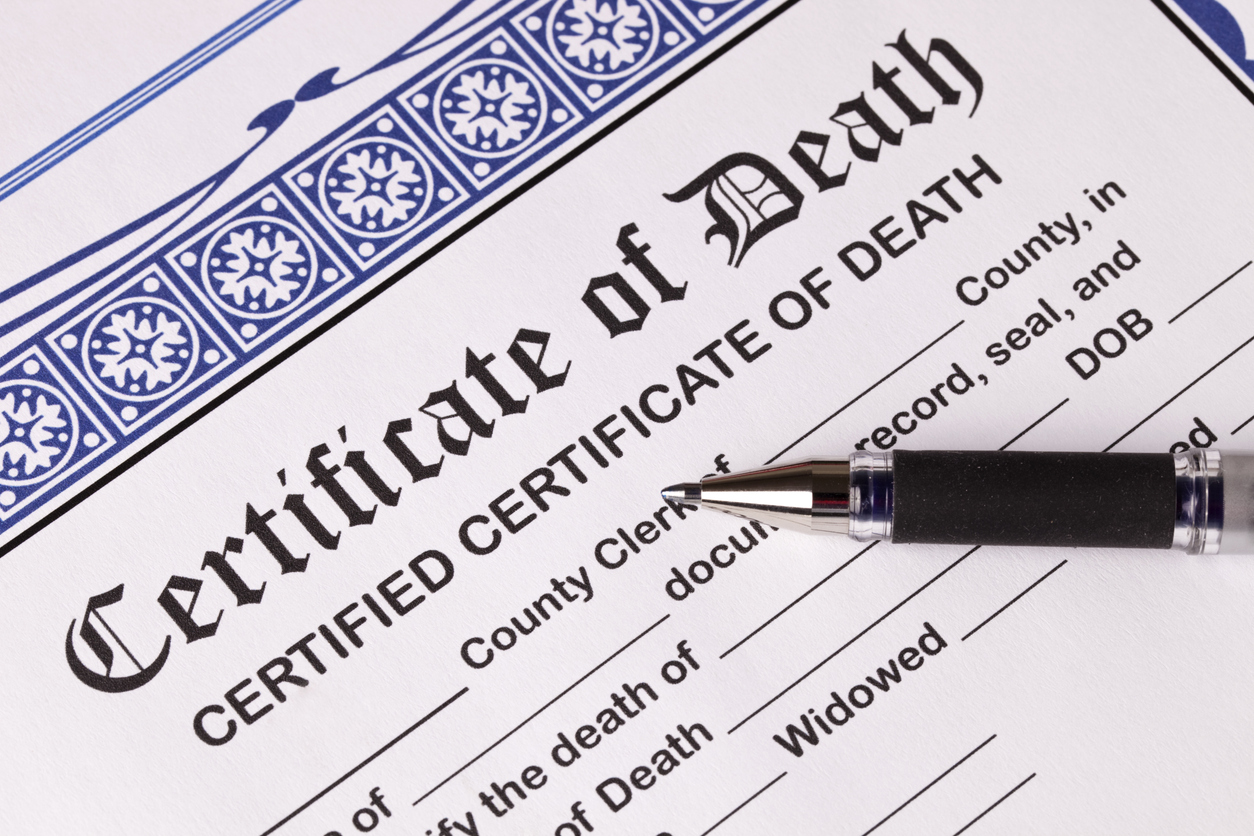
Death Certificate Translation in Poland: Probate, Registry, and Family Procedures
Table of content
Certified Death Certificate Translation: Translating civil registry documents is a core service at the MS Mostowy Translator’s Office. Among the most critical of these are foreign death certificates. Dealing with the loss of a loved one is inherently difficult, and navigating foreign bureaucracy can add to that stress.
To help clarify the legal requirements, this guide explains exactly when a sworn translation of a death certificate is needed in Poland, the strict rules enforced by Polish authorities, and why the cost of translating these documents varies so significantly depending on their country of origin.
What is a Certified Translation and Who Can Perform It?
In Poland, an official translation of a death record cannot be done by a standard translator. It must be prepared by a licensed Sworn Translator who has passed a rigorous state exam and is listed in the official registry maintained by the Polish Ministry of Justice.
Sworn translations must adhere to specific legal provisions set by the Ministry and professional bodies like PT TEPIS. Issued in printed form, the translation must feature the translator’s official seal and handwritten signature.
Crucially, the translation must include a detailed description of the source document itself. The translator meticulously documents the paper type, background color, and any embedded security features (like watermarks). Finally, the translator includes a certification clause stating whether the translation was based on the original document or a scanned copy.
When Do You Need It in Poland?
A formal confirmation of a foreign death certificate’s authenticity is typically required by courts, registry offices (Urząd Stanu Cywilnego – USC), insurance companies, the Social Insurance Institution (ZUS), notaries, and banks.
The most common situations include:
- Registering a Death in Poland: If a Polish citizen dies abroad and you wish to register the passing with the Polish Registry Office (USC), you must submit an application along with the original foreign death certificate and its sworn translation.
- Probate and Inheritance Proceedings: If the deceased lived abroad, or if beneficiaries reside outside of Poland, a certified translation of the death act must be submitted to the Polish court or notary handling the estate.
- Claiming Financial Benefits: Institutions responsible for disbursing life insurance, survivor’s pensions, or disability benefits (like ZUS) will require an official translation to verify eligibility and initiate the payout.
- Repatriation of Remains: If the death or cremation occurred abroad and the family wishes to transport the ashes or body back to Poland, a sworn translation must be submitted to the relevant authorities and sanitary inspectors to complete the transport paperwork.
Official Requirements: Originals, Security Features, and Legibility
1. Translations “From the Original” (Front and Back)
If you are submitting the document to a Polish Registry Office (USC), the translation must be performed from the original document. Translations based solely on scans are routinely rejected.
Furthermore, you must provide the translator with the entire document—both front and back. For example, U.S. death certificates often print vital security information or registrar attestations on the reverse side. The USC checks this during registration. If the translator only receives a scan of the front, they cannot legally certify that the translation was made from a complete original document.
2. Description of Security Elements
The USC will keep the original document and verify if the sworn translator accurately described all security elements confirming its authenticity. These features often include:
- Watermarks: Standard on UK, Australian, and U.S. certificates (varying by state).
- Embossed Seals: Often invisible on digital scans, requiring physical inspection.
- Advanced Features: Guilloche patterns, microprint borders, or even thermochromic ink.
3. Deciphering Handwritten Entries
Older death certificates were filled out by hand. If the registrar’s handwriting is illegible, the translator may ask for your assistance to decipher names or locations. Even the slightest misspelling in the translated name of the deceased can result in the document being rejected by the USC or the court.
Cost and Delivery Time: Why Some Certificates Are So Long
Standard delivery time for a death certificate translation is 2 to 3 business days.
However, clients are often surprised by the cost. Many assume a death certificate is a short, standardized one-page document. In reality, the cost of a sworn translation in Poland is calculated by the number of characters: 1 statutory page = 1125 characters (including spaces).
Depending on the country (and even the state/province), the amount of information varies drastically:
- United States: American certificates are incredibly detailed. They often list the exact cause of death, the attending physician’s details, and the registrar’s credentials. Combined with Apostille translations and complex security features, U.S. documents usually range from 5 to 10 pages of certified translation.
- Example: In 2025, we translated a Florida death certificate featuring thermochromic ink and microprint borders that amounted to 5 translation pages. A record-breaking certificate from Washington State resulted in 10 pages of certified translation due to extensive attestations on the reverse side.
- United Kingdom & Ireland: Documents from England, Scotland, and Ireland are generally more concise, typically resulting in 2 to 3 pages of certified translation.
- Canada: Canadian certificates are also relatively brief. For example, a recent death certificate from Ontario featured minimal security elements (just an ink stamp and signature), amounting to only 2 standard pages of translation.
To receive an accurate quote, you must send us a scan of the complete document.
How to Order: Step-by-Step Guide
- Contact Us: Email us or use the contact form located in the Pricelist on our website. Attach a clear scan of the document (front and back).
- Get a Free Quote: We will review the file and provide a preliminary cost estimate and delivery timeline.
- Acceptance: If you agree to the terms, we will share payment methods. A down-payment is required for first-time clients.
- Translation Process: A sworn translator prepares, stamps, and signs the document in accordance with Polish law.
- Provide the Original: If you need the “from the original” annotation (mandatory for the USC), you can deliver the physical document to our office in person or via Postal Service. We will return it intact.
- Delivery: Once completed, you can pick up the translation at our office, or we can securely ship it to your address.
FAQ: Certified Death Certificate Translation in Poland
In most cases, we complete the translation within 2 to 3 business days. The exact timeframe depends on the length of the document and the source language, and will always be confirmed when we provide your free quote.
Yes. If your document was issued outside the European Union and features an Apostille, Polish authorities require that the Apostille, along with all foreign stamps and seals, be translated into Polish by a sworn translator.
Many foreign death certificates (especially from the U.S.) feature crucial legal disclaimers, registrar attestations, or security feature descriptions on the reverse side. Polish Civil Registry Offices (USC) require the entire document to be translated. If we only translate the front, the USC may reject your application.
While the Civil Registry Office (USC) strictly requires translations made “from the original,” Polish courts and notaries handling inheritance proceedings sometimes accept translations made from a scan. However, this is entirely at the discretion of the presiding judge or notary. We strongly advise confirming their exact requirements before ordering.
No. A certified translation of a civil registry act does not have an expiration date. As long as the original foreign document remains valid and the translation is physically legible and intact, it remains legally binding in Poland indefinitely.