


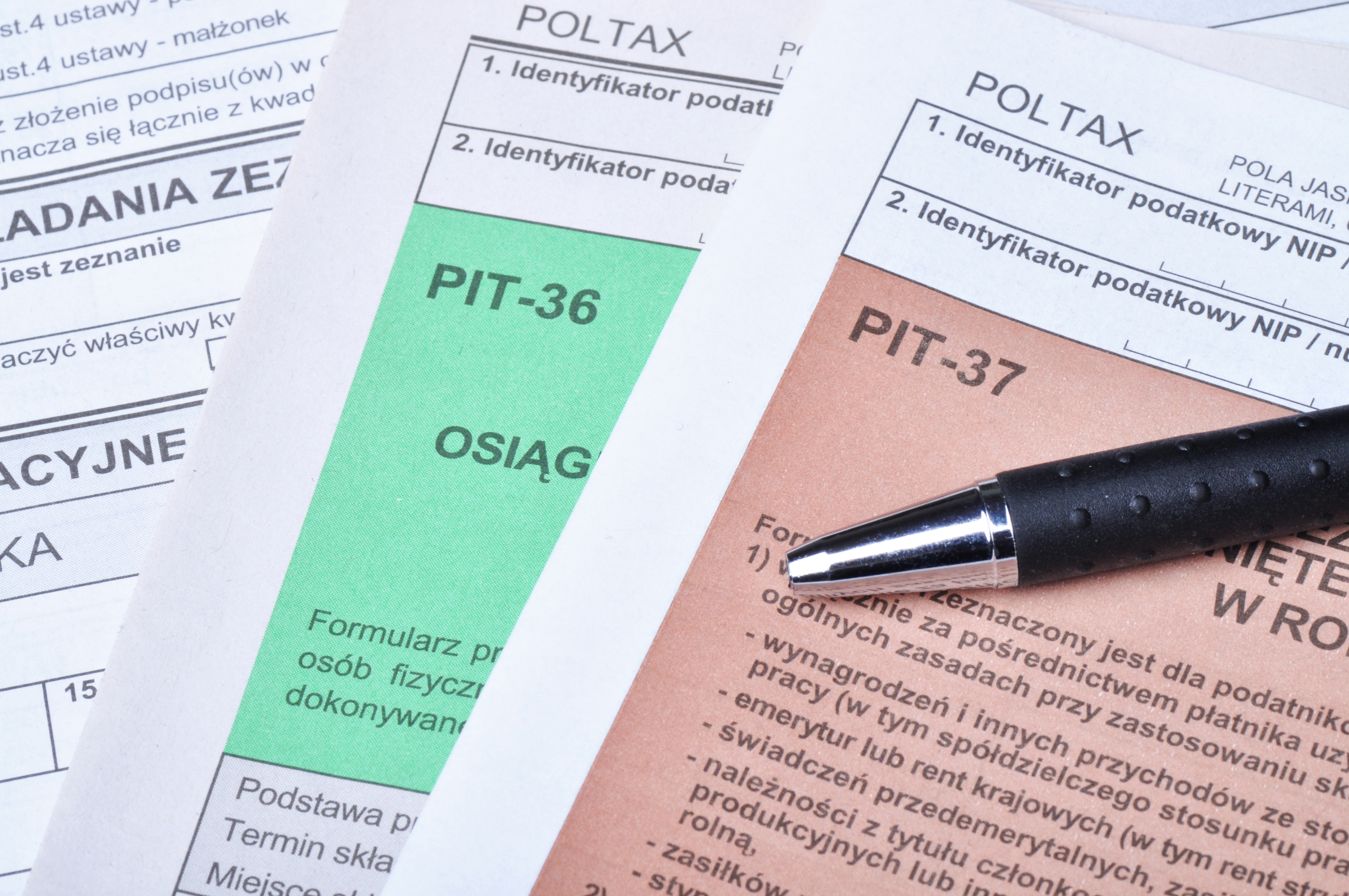
Certified Translation of a PIT Tax Return
Table of content
Due to the rapid development of international business and increasing globalisation, many clients now choose to run businesses abroad or provide services to foreign contractors. When a client works outside Poland or operates on international markets, a certified translation of a PIT tax return may be required in order to correctly document and settle income with the Polish Tax Office.
Many clients therefore wonder when a certified translation is necessary and when a standard translation will be sufficient. In this article, we explain who can prepare this type of translation, when it may be required and what challenges are involved. Finally, we discuss the costs and turnaround times at MS Mostowy Translator’s Office.
For a broader overview of this type of documentation, see our guide to certified financial document translation.
Who Can Prepare a Certified Translation of a PIT Tax Return?
A certified translation of a PIT tax return is a specialised form of officially certified translation of tax documentation.
It can only be prepared by a professional holding the appropriate authorisation issued under the Polish system by the Ministry of Justice.
To understand the importance of these qualifications, it is useful to know exactly who is authorised to issue certified translations. You can find more information in our guide on where to find and verify a sworn translator in Poland.
To obtain the required qualifications, a translator must pass a highly specialised state examination and take an official oath before the Minister of Justice.
Only after fulfilling these formal requirements may the translator issue certified translations for official use.
This is the key difference between a certified translation and a standard translation. Where an institution requires an officially certified document for administrative or tax purposes, a standard translation will not be sufficient.
You can also compare the different types of services offered by MS Mostowy in our translation services overview.
When Is a Certified Translation of a PIT Tax Return Required?
A PIT translation is most commonly required when a client works abroad, operates a business on a foreign market or provides services to international contractors.
To correctly settle foreign income with the Polish Tax Office, it may be necessary to provide the relevant documentation in Polish.
For entrepreneurs operating internationally, an accurately prepared specialist translation of tax returns helps maintain clarity and consistency in financial documentation. This can help avoid legal or financial consequences resulting from incorrect or incomplete documentation.
Individuals working abroad may also require a reliable translation in order to correctly document their income and avoid issues such as double taxation.
PIT Translation for a Mortgage or Loan Application
Another common situation involves applying for a mortgage, loan or another financial product from a foreign bank, for example when purchasing property abroad.
As part of its creditworthiness assessment, the bank may ask the applicant to provide PIT tax returns from previous years.
In such a situation, a certified translation may be required so that the foreign bank analyst can review the applicant’s income history.
Common Mistakes and Translation Challenges
Tax returns are documents closely connected with financial and tax law, which makes their translation particularly demanding.
The translator must have an excellent command of specialist terminology in both languages and understand the tax systems involved. This expertise helps prevent substantive translation errors.
Many terms used in the Polish tax system do not have exact equivalents in other languages.
The translator must therefore find the right balance between a literal translation and a descriptive equivalent while maintaining accuracy and readability.
Professional standards and the principles governing this type of work are also reflected in the MS Mostowy Rules of Professional Ethics.
Descriptions that are unnecessarily long can reduce the readability of the document and increase the overall volume of the translation.
Changing Tax Forms and Complex Formatting
Another challenge is that tax regulations and the layout of tax forms may change from year to year.
Forms such as PIT-28 and PIT-36 contain numerous tables, boxes and instructions that must be reproduced clearly in the translated document.
Recreating these complex layouts requires technical skills because OCR software often struggles with the dense print and structure of official tax forms.
Certified Translation of a PIT Tax Return – Costs and Turnaround Times
Clients often ask how much a certified translation of a PIT tax return costs and are sometimes surprised by the quotation.
This is because the calculation is based on a billing page rather than on the number of physical A4 pages.
For certified translations, one billing page equals 1,125 characters including spaces.
PIT forms contain a large amount of information and instructions printed in small type.
As a result, a document consisting of only four physical pages may amount to considerably more billing pages once the text has been counted.
This is why clients sometimes wonder why the cost of a certified translation appears high despite the relatively small number of physical pages.
For more information about the billing method, see the MS Mostowy translation pricelist.
A good example is a PIT-28 consisting of 11 physical pages, which may result in as many as 40 billing pages of certified translation.
A Useful Tip for Clients
Before ordering the translation, ask the institution receiving the document whether it requires the entire tax return to be translated or only the completed fields.
If the institution accepts a translation limited to completed sections, with empty fields and instructions omitted, the total cost may be reduced by as much as half.
The translator cannot make this decision independently. Clear instructions must be provided by the client.
How to Order a Certified Translation of a PIT Tax Return
To order the translation, simply contact MS Mostowy Translator’s Office by email or provide the documents directly to the office.
Before placing the order, you should determine two things:
- Whether the entire form must be translated or only the completed fields.
- Whether the translation must be prepared from the original document or whether an electronic copy is sufficient.
Providing this information at the beginning allows the translation process to proceed efficiently and helps avoid unnecessary delays.
If the translation is urgent, you can also ask about an express certified translation, which may help accelerate mortgage, banking or administrative procedures.
Providing the complete documentation and all necessary instructions without delay enables MS Mostowy Translator’s Office to complete the assignment within the agreed timeframe.
To request a quotation, contact MS Mostowy Translator’s Office and send the document for review.
FAQ – Certified Translation of a PIT Tax Return
A certified translation of a PIT tax return can be prepared by a sworn translator holding the appropriate professional qualifications and authorisation under the Polish system. The translator must have passed the required state examination and taken the official oath before the Minister of Justice.
It may be required when a person works abroad, operates a business internationally, provides services to foreign contractors or needs to submit income documentation to a foreign institution. It may also be requested when applying for a mortgage, loan or another financial product from a foreign bank.
PIT forms contain a large amount of text, instructions, tables and small-print information. The translation is calculated on the basis of billing pages rather than physical A4 pages, with one billing page corresponding to 1,125 characters including spaces.
Not necessarily. The institution receiving the document may accept a translation of only the completed fields rather than the entire form. The client should confirm this requirement in advance. The translator cannot independently decide to omit empty fields or instructions.
Yes, the client can provide an electronic copy when ordering the service, but should first establish whether the receiving institution requires the translation to be prepared from the original document or whether a copy is sufficient.