


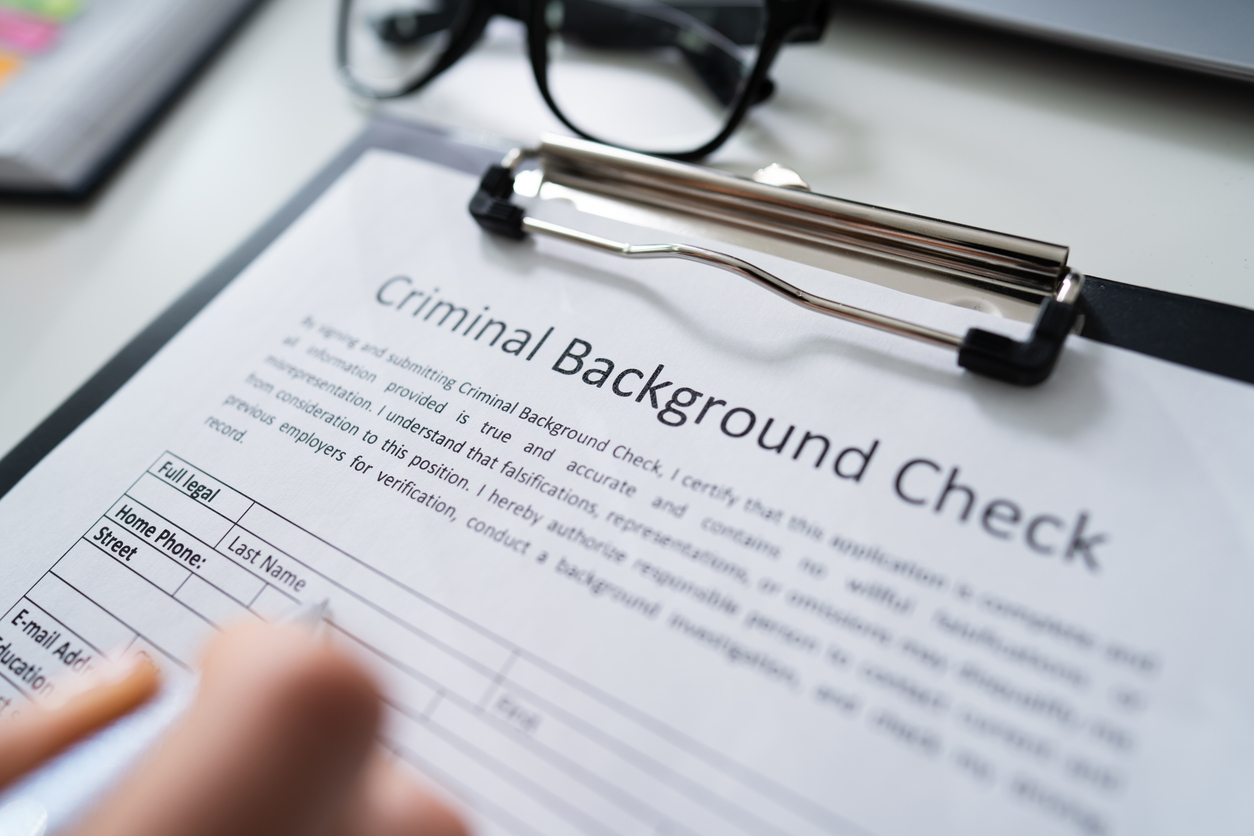
When applying for a job, a visa, or a university internship in Poland, you may be asked to submit a certificate of no criminal record (often called a police certificate or background check). If your document was issued abroad, Polish employers and administrative offices will require a certified Police Certificate Translation.
At the MS Mostowy Translator’s Office, we routinely assist foreigners in translating their criminal record checks. Below, we explain how to obtain this document in Poland, when a sworn translation is legally mandatory, how the recent “Kamilek Act” affects foreigners, and how translation costs are calculated.
What is a Certified Police Certificate Translation?
Table of content
A police certificate translation is a highly formal document that must be prepared by a licensed Sworn Translator. Authorized by the Polish Ministry of Justice, the translator certifies that the Polish text is a true and accurate representation of the foreign original.
The translation is issued in physical form, bearing the translator’s official seal and handwritten signature. It is fully recognized by Polish courts, government offices, and corporate employers.
How to Get a Polish Certificate of No Criminal Record (KRK)
If you need to prove your lack of a criminal record during your stay in Poland, you must obtain a certificate from the National Criminal Register (Krajowy Rejestr Karny – KRK). You can do this in three ways:
- In-Person (Immediate): Visit an information desk of the National Criminal Register located at district courts throughout Poland. You can fill out the application on-site or download it from the Ministry of Justice’s website. The fee is 30.00 PLN (payable in cash, via bank transfer, or with court fee stamps), and the stamped certificate is issued immediately.
- Online (Up to 20 days): If you have a Polish Trusted Profile (Profil Zaufany) or a qualified electronic signature, you can apply via the KRK e-Platform. The fee is reduced to 20.00 PLN, but processing can take up to 20 calendar days.
- By Mail (Up to 7 days): You can mail your application and proof of payment to the KRK Information Office in Warsaw (ul. Czerniakowska 100, 00–454 Warsaw). You should receive the document within 7 days of the court receiving your request.
Note: If you are dealing with government paperwork, you may also need to verify your identity with a passport translation or ID card translation.
When Do You Need a Sworn Translation?
If you are a foreigner applying for specific roles in Poland, you must provide a police certificate from your home country. If it is not in Polish, a sworn translation is mandatory. Professions that strictly require a clean criminal record include:
- Teachers, educators, and university interns
- Judges, prosecutors, and notaries
- Police officers, border guards, and licensed security personnel
- Tax inspectors and local government employees
- Professional drivers (who also require a driving license translation)
The “Kamilek Act” (Protection of Minors)
On February 15, 2024, strict amendments to the Family and Guardianship Code—widely known as the “Kamilek Act”—came into effect. This law mandates rigorous background checks for anyone whose work or volunteer activities involve contact with minors (under 18 years old).
If you are applying for a job, internship, or volunteer position involving the education, medical treatment, or sports training of minors, you must submit a police certificate.
Crucial rule for foreigners: If you have resided outside of Poland at any point in the past 20 years, you must submit a formal declaration of your residential history. Furthermore, you must provide a foreign police certificate—along with its sworn Polish translation—from every single country you have lived in during that 20-year period.
For example: We recently assisted a university student applying for a teaching internship. Because he had lived in Norway and Iceland over the past decade, we provided certified Polish translations of both his Norwegian and Icelandic police certificates. Similarly, we successfully prepared translations for another student who required background checks from both Australia and the U.S., allowing them to legally begin their teaching practicum in Poland.
(Planning to settle permanently with your family? Remember that schools and immigration offices may also require your birth certificate translation and marriage certificate translation.)
Cost and Delivery Time: Pages vs. Characters
The delivery time for a police certificate translation is very fast—usually within 1 to 2 business days—because the layout of these documents is highly standardized.
However, the cost is not calculated by the physical size of the paper. In Poland, certified translations are billed by character count: 1 statutory page = 1125 characters (including spaces).
- Digital vs. Paper: A purely digital background check from Ontario (Canada) or Texas (USA) features no physical stamps or handwritten signatures, typically amounting to 2 standard translation pages. Conversely, a hand-filled Polish KRK certificate printed on one A4 page contains numerous official court seals, duty stamps, and signatures, pushing the translation volume to 3 pages.
- Complex European Documents: Following the “Kamilek Act,” we frequently translate Norwegian police certificates. While the English-language document is only two physical A4 pages, the dense legal text translates into 4 statutory pages.
To get an exact quote, always send us a full scan of your document.
How to Order Your Translation Remotely
- Send Us a Scan: Email us a clear scan or digital PDF of your police certificate, or upload it via the contact form under our website’s Pricelist tab.
- Free Quote: We will instantly evaluate the document’s character count and provide a precise cost and delivery timeline.
- Acceptance & Payment: Once you accept the terms and provide the down-payment, our sworn translator will immediately begin working on your document.
- Original Verification (If Needed): If your employer or university strictly requires a translation “from the original,” deliver the physical certificate to our office. We will inspect it and return it intact.
- Collection: We will email you a digital scan of the finished translation, while the physical, officially stamped document can be picked up at our office or securely mailed to your address.
FAQ:
Polish law does not specify a universal expiration date for criminal record checks. However, most employers, universities, and government offices require the certificate (and its translation) to be issued no earlier than 3 to 6 months prior to submission. Always check the specific validity requirements with your employer or HR department.
It depends on the country of issue and the institution requesting the document. Many Polish employers accept a standard sworn translation of a foreign police certificate. However, if the document is being submitted to a government office for immigration purposes, an Apostille from the issuing country is often mandatory. If an Apostille is attached, the sworn translator must translate it as well.
No. A sworn translator only translates the official document you provide. We do not have access to police databases, nor can we apply for a foreign or Polish criminal record check on your behalf. You must obtain the certificate from the relevant authorities first.
Yes. Many countries (such as the UK, USA, and Canada) issue electronic police certificates with digital signatures or QR codes. We can translate these directly from the PDF file. The sworn translation will include a note stating that the source document was provided in a digital/electronic format.
If you are obtaining a Polish KRK certificate specifically for working with minors, download the form from the Ministry of Justice. In Section 13 (“Scope of data”), you must explicitly write: “Art. 21 ust. 3 ustawy z dnia 13 maja 2016 r. o przeciwdziałaniu zagrożeniom przestępczością na tle seksualnym (Dz. U. z 2024 r. poz. 560).” Then, in Item 12, make sure to check the boxes for both “Kartoteka karna” (Criminal record) and “Kartoteka nieletnich” (Juvenile record).